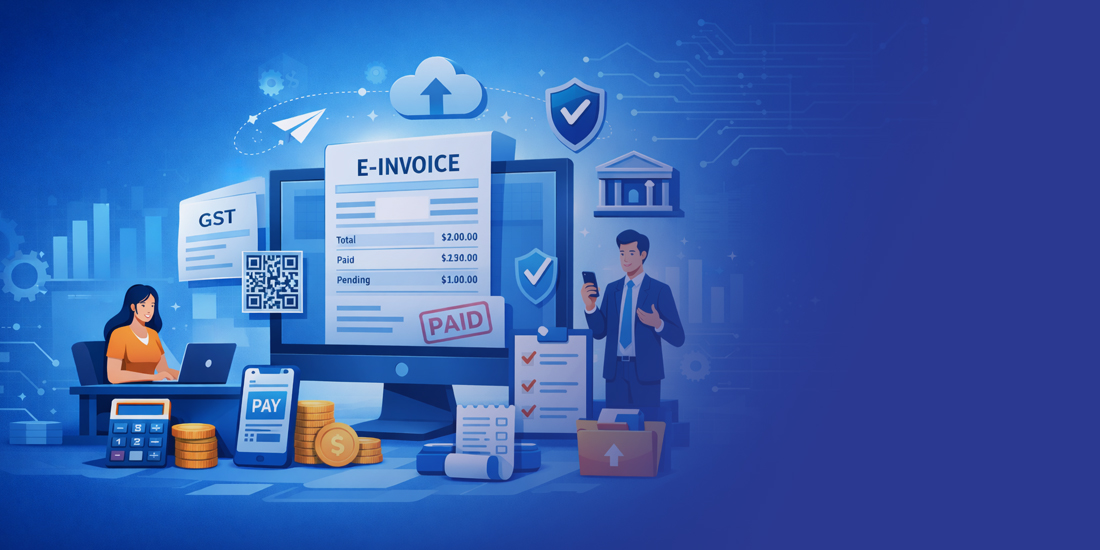
Tailored to Fit Your Business

Seamless Integration, Multiple Options
Multiple integration options –ERP (API/SFTP/DB), POS systems to simple portal solutions

100% Ministry of Business, Innovation and Employment (MBIE) Compliance
Ensuring full adherence to Ministry of Business, Innovation and Employment (MBIE) regulations for hassle-free e-invoicing

Secure Cloud Archival
Stores invoices safely in the New Zealand cloud

24/7 Support
Round the clock assistance, Option to choose SLA
Schedule a Complementary Awareness Session
E-Invoicing in New Zealand: Regulatory Overview
While e-invoicing is voluntary for the private sector, the government is using procurement rules to mandate adoption for the public sector and its major partners.
New Zealand has set aggressive targets to digitize the public sector supply chain:
New Zealand does not require real-time reporting (Continuous Transaction Controls) to the Inland Revenue (IRD). The framework is focused on business-to-business efficiency and the "Smart Data Economy" rather than tax-authority monitoring.
Our Global Clients




Customer Speak – Trusted by Enterprises

Redefining E-Invoicing for a Smarter Tomorrow
Lenorasoft delivers innovative and reliable solutions with seamless integration, 24/7 support, and rapid scalability to fuel growth. Their Anusaar e-invoicing Portal simplifies ERP integration, ensures compliance, and boosts efficiency with advanced dashboards and automation, setting a new standard for excellence.
Best Next-Gen E-Invoicing Solution Provider
Lenorasoft is known for its easy usability, reliability, and round-the-clock quick customer support, providing smooth compliance for e-invoice generation. Their e-invoicing solution, Anusaar ensures productivity and satisfaction, making them a trusted choice for modern businesses.
Consolidated e-invoices made simple
Lenorasoft’s product Anusaar made consolidated e-invoicing super simple for us. With their custom solutions to our requirements, we were able to consolidate data from multiple partner systems. They mitigated our issue of data storage and with their friendly support, they ensured a seamless integration making our goal easily achievable.