How to Automate UAE E-Invoicing Compliance: A Practical Guide for Businesses
As businesses prepare for mandatory digital invoicing, the ability to automate uae e-invoicing processes is becoming a strategic priority. Manual invoice preparation, validation, formatting, and reporting can create errors and compliance risks. Automation helps businesses create accurate, structured invoices while reducing the operational burden on finance teams.
What Does UAE E-Invoicing Automation Mean?
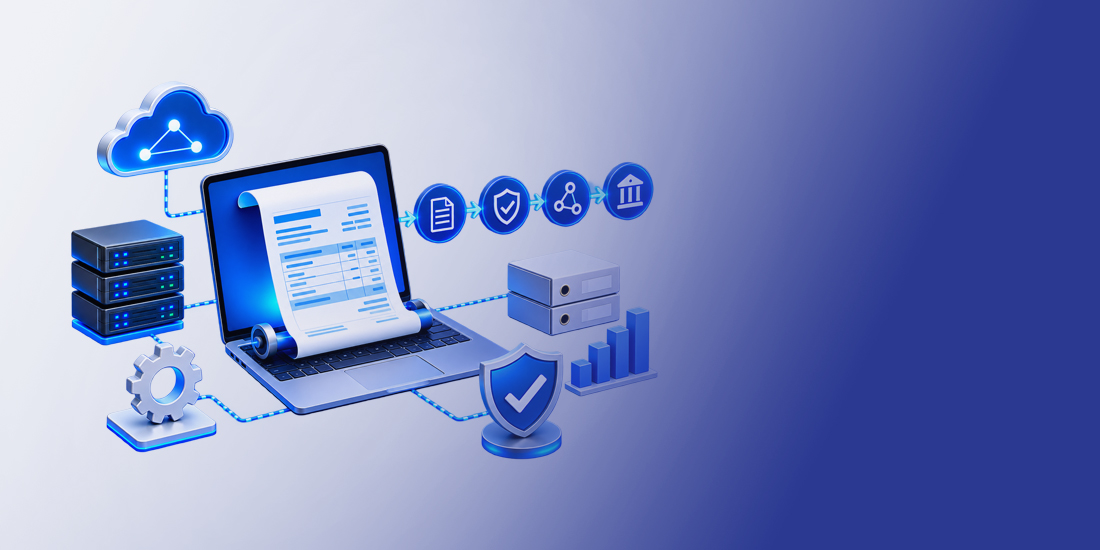
To automate uae e-invoicing means using technology to manage the complete electronic invoicing lifecycle—from generating an invoice to validating, transmitting, receiving, and archiving it. Instead of relying on manual processes, businesses can connect their ERP, accounting, billing, or business applications with an e-invoicing platform.
The objective is not simply to replace PDF invoices. UAE e-invoicing requires businesses to work with structured electronic invoice data that can be processed and exchanged through the prescribed ecosystem.
- Assess Your Current Invoicing Process
Before you automate uae e-invoicing, begin with a detailed assessment of your existing invoicing workflow. Identify where invoice data originates, how it moves between systems, which teams review it, and where manual intervention occurs.
Businesses should evaluate their ERP, accounting software, customer master data, tax information, product details, invoice formats, and existing integration capabilities. This assessment helps identify gaps that could affect implementation.
- Connect Your ERP and Business Systems
A major step to automate uae e-invoicing is integrating the e-invoicing platform with your existing technology environment. Businesses may generate invoices through ERP systems such as SAP, Oracle, Microsoft Dynamics, Tally, Odoo, or other accounting and billing applications.
An integration layer can automatically extract invoice information, transform it into the required structured format, validate the data, and send it through the appropriate e-invoicing network. This eliminates repetitive data entry and reduces the risk of human error.
- Validate Invoice Data Automatically
Data quality is critical when you automate uae e-invoicing. Incorrect tax information, missing mandatory fields, invalid customer details, or inconsistent product data can create rejected or non-compliant invoices.
Automated validation can check invoice information before transmission. Businesses can establish rules for tax identifiers, invoice numbers, dates, amounts, VAT calculations, customer information, and other required data elements.
This proactive approach allows finance teams to correct issues before invoices are submitted rather than discovering problems afterward.
- Use an Accredited Service Provider
To automate uae e-invoicing effectively, businesses should carefully evaluate their Accredited Service Provider (ASP). The provider should support the UAE’s required e-invoicing framework, secure data exchange, structured invoice formats, integration capabilities, monitoring, and compliance updates.
A capable ASP can act as an important technology layer between the company’s internal systems and the wider e-invoicing ecosystem.
- Automate Transmission and Status Tracking
Once an invoice passes validation, automation should handle transmission without requiring finance employees to manually upload every document. When you automate uae e-invoicing, invoice status, acknowledgements, validation results, and exceptions can also be tracked centrally.
A dashboard can give finance and compliance teams visibility into successful submissions, rejected invoices, pending transactions, and system issues. This improves control and reduces dependency on spreadsheets and manual reconciliation.
- Maintain Audit Trails and Records
Another important reason to automate uae e-invoicing is stronger record management. Automated systems can maintain invoice histories, validation results, transaction timestamps, acknowledgements, and other relevant records.
This creates a more transparent audit trail and makes it easier for finance teams to investigate discrepancies or respond to compliance requirements.
- Keep Compliance Updated
UAE e-invoicing is not a one-time technology project. Businesses must continuously monitor changes to , technical specifications, data requirements, and implementation guidelines.
When organizations automate uae e-invoicing through a capable platform, compliance updates can be incorp uae e-invoicing regulation sorated into the technology layer, reducing the need for businesses to repeatedly redesign their internal invoicing processes.
- Build Exception Management Into the Process
Even highly automated environments can encounter rejected invoices, incorrect master data, integration failures, or temporary system issues. Therefore, businesses should automate uae e-invoicing with clear exception-handling workflows.
Instead of sending every issue to the IT team, finance users can receive alerts, identify the reason for failure, correct the underlying information, and resubmit the transaction.
The Business Value of E-Invoicing Automation
The decision to automate uae e-invoicing goes beyond regulatory compliance. It can reduce manual work, improve invoice accuracy, accelerate processing, strengthen financial controls, and provide better visibility into transaction data.
For CFOs and finance leaders, automation can also create a scalable foundation for future digital finance initiatives. As transaction volumes increase, an automated architecture can handle invoicing more efficiently without requiring proportional increases in administrative effort.
Conclusion
The right approach to automate uae e-invoicing combines compliant technology, ERP integration, automated validation, secure transmission, monitoring, and continuous updates. Businesses that start preparing early can identify data and integration gaps before mandatory requirements become operationally critical.
Ultimately, organizations should automate uae e-invoicing as part of a broader finance transformation strategy—not simply as a compliance exercise. A well-designed solution can turn e-invoicing from a regulatory obligation into an opportunity to build faster, more accurate, and more connected financial operations.