
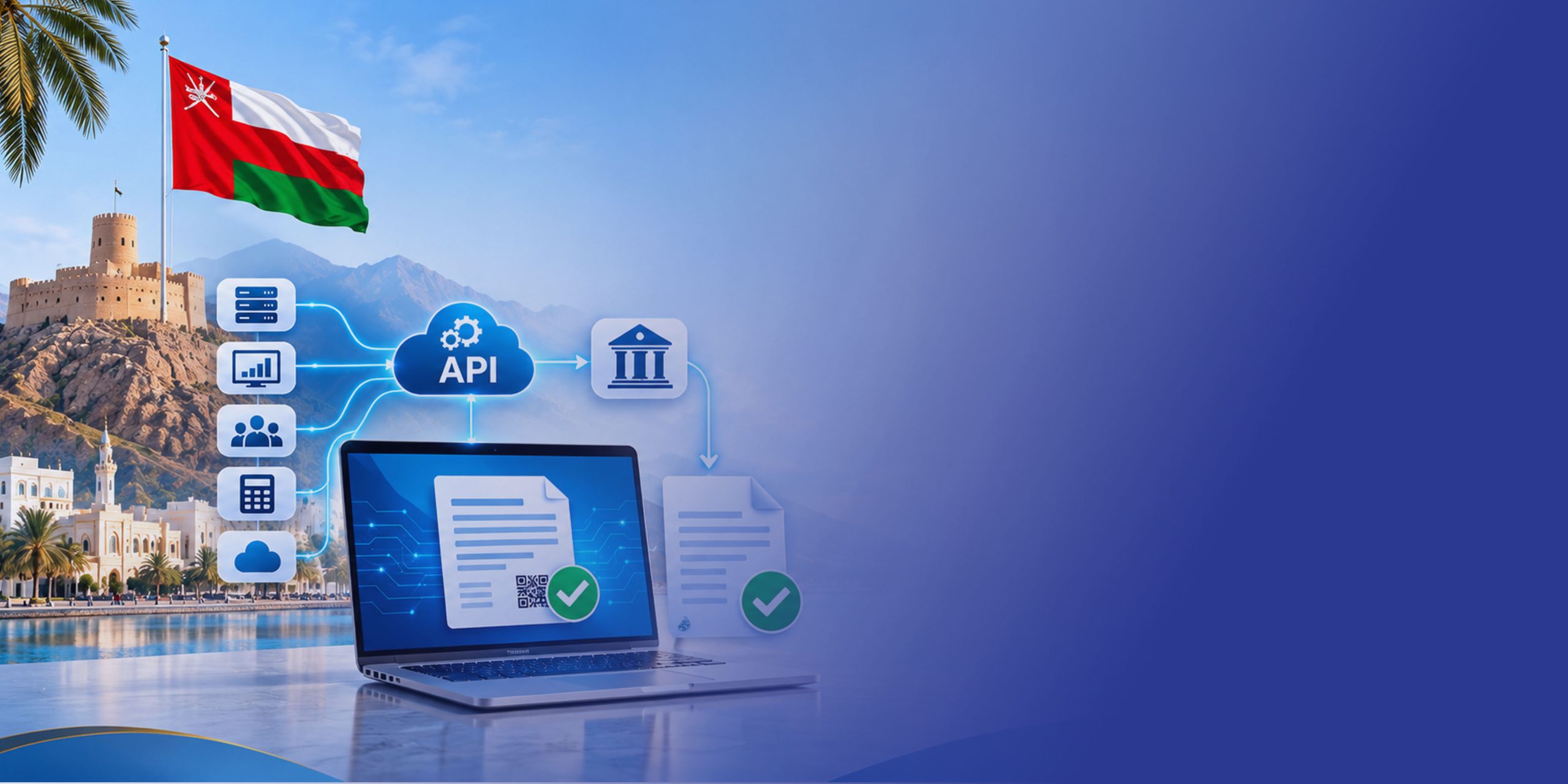
Oman E-Invoicing API Integration: Connecting Business Systems for Seamless Digital Compliance
As Oman moves towards digital tax transformation, businesses need reliable technology to modernise their invoicing processes. oman e-invoicing API integration enables organisations to connect their existing ERP, accounting, billing and business management systems with e-invoicing platforms, helping automate invoice exchange, improve accuracy and prepare for regulatory compliance.
For businesses operating in Oman, API integration is more than a technical upgrade. It is an opportunity to reduce manual work, improve financial visibility and build a scalable invoicing infrastructure.
What Is API Integration in Oman E-Invoicing?
API (Application Programming Interface) integration allows different software applications to communicate and exchange information automatically. In an e-invoicing environment, APIs connect a company’s internal systems with its e-invoicing service provider and the relevant tax infrastructure.
With oman e-invoicing API integration, businesses can generate invoice data directly from their existing applications and transfer it to an e-invoicing platform for validation, processing and reporting, according to the applicable regulatory requirements.
This eliminates the need to manually create, upload and manage invoices across multiple platforms.
Why Do Businesses Need E-Invoicing API Integration?
As businesses expand, managing invoices manually becomes increasingly difficult. Multiple systems, high transaction volumes and disconnected financial processes can create errors and operational delays.
Implementing oman e-invoicing API integration offers several important benefits:
- Automated invoice processing: Generate and exchange invoice information directly from existing business applications.
- Reduced manual errors: Minimise repetitive data entry and improve consistency across financial records.
- Faster invoice processing: Reduce administrative delays through automated data transmission.
- Improved financial visibility: Maintain better control over invoice status, reporting and transaction records.
- Scalable operations: Support increasing invoice volumes without significantly increasing administrative workloads.
For organisations handling large transaction volumes, these improvements can make a meaningful difference to finance department productivity.
How Does API Integration Work in the Fawtara Framework?
Oman’s Fawtara e-invoicing framework follows a five-corner model that connects suppliers, their service providers, buyers, buyers’ service providers and the Oman Tax Authority (OTA).
A typical integration process involves:
- Invoice generation: The company’s ERP or accounting software generates invoice information.
- Data mapping: Invoice details are mapped to the required e-invoicing data fields and formats.
- API communication: The information is securely transmitted to the connected service provider.
- Validation and exchange: The service provider processes the invoice according to applicable technical and regulatory requirements.
- Tax reporting: Relevant invoice data is reported to the OTA, with acknowledgements and status updates managed through the connected systems.
A properly designed oman e-invoicing API integration helps businesses automate this entire workflow while maintaining consistency between their internal financial systems and the e-invoicing network.
Key Systems That Can Be Connected Through APIs
One of the biggest advantages of oman e-invoicing API integration is its flexibility across different business applications.
Businesses can connect:
- ERP systems: SAP, Oracle, Microsoft Dynamics and other enterprise platforms.
- Accounting software: Financial applications used for billing, taxation and bookkeeping.
- CRM platforms: Systems that manage customer information and sales transactions.
- Billing applications: Subscription billing, invoicing and payment management platforms.
- Custom business applications: Industry-specific applications developed for individual operational requirements.
For companies managing Oman b2b e-invoicing transactions, connecting these systems can help ensure that invoice information moves efficiently between suppliers, buyers and service providers.
Important Considerations Before Implementing API Integration
Before starting oman e-invoicing API integration, businesses should evaluate their existing technology infrastructure and operational requirements.
Consider these important factors:
- Data accuracy: Ensure customer, supplier, VAT and product information is complete and consistent.
- Security: Implement secure API authentication, encryption and appropriate access controls.
- Error management: Establish mechanisms for handling rejected invoices, failed requests and transmission interruptions.
- Testing: Conduct end-to-end testing using realistic business transactions before going live.
- Scalability: Select an integration architecture that can support growing transaction volumes.
- Regulatory updates: Keep systems aligned with the latest OTA technical specifications and applicable compliance requirements.
These steps can reduce implementation challenges and help businesses avoid costly disruptions.
Choosing the Right E-Invoicing Integration Partner
Selecting the right technology partner is essential for successful oman e-invoicing API integration. Businesses should work with an Oman Tax Authority-accredited service provider that understands local regulatory requirements, technical standards and system connectivity.
An experienced integration partner should offer:
- Seamless ERP and accounting software connectivity.
- Secure API infrastructure and data transmission.
- Automated invoice validation and reporting.
- Real-time monitoring and error notifications.
- Technical support and ongoing system maintenance.
The right partner can simplify implementation while allowing finance and IT teams to focus on business operations.
The Future of Automated Invoicing in Oman
As Oman’s digital tax ecosystem develops, API-driven invoicing will become increasingly important for businesses of different sizes. Investing in oman e-invoicing API integration today can help organisations prepare for regulatory changes, improve operational efficiency and establish a connected financial ecosystem.
Businesses should begin assessing their existing systems, identifying integration gaps and planning their technology requirements ahead of their applicable implementation deadlines. The OTA’s published guidance and technical specifications should remain the primary reference during implementation.
Conclusion
E-invoicing is not simply about replacing paper invoices with digital documents. It is about creating a more connected, transparent and automated financial process.
With the right oman e-invoicing API integration, businesses can streamline invoice processing, strengthen data accuracy, improve compliance readiness and build a scalable foundation for future growth.
Is your business ready to connect its ERP and accounting systems with Oman’s Fawtara e-invoicing ecosystem? Start planning your integration today.