
PINT AE vs Peppol: Understanding the Difference in UAE E-Invoicing
PINT AE vs Peppol is an important distinction for businesses preparing for the UAE e-invoicing framework. While both are closely connected, they are not the same thing. PINT AE defines how invoice information is structured for the UAE, while Peppol provides the framework and network infrastructure for exchanging electronic business documents.
Understanding PINT AE vs Peppol helps CFOs, finance teams, IT leaders, and businesses choose the right approach for compliant electronic invoicing.
What Is PINT AE?
PINT AE is the UAE-specific implementation of the Peppol International Invoice model. It defines the required business information, data elements, rules, and technical structure for electronic invoices in the UAE.
In simple terms, PINT AE answers the question:
“What should a compliant UAE e-invoice contain and how should its data be structured?”
It is designed to support standardized electronic invoices and interoperability between businesses, Accredited Service Providers (ASPs), and the UAE tax administration ecosystem.
What Is Peppol?
Peppol is a global framework for the secure and standardized exchange of electronic business documents. It includes specifications, governance rules, and a network model that enables organizations using different systems to exchange documents electronically.
Peppol answers a different question:
“How can businesses securely exchange standardized electronic documents across different systems?”
The Peppol network uses an interoperable model involving service providers and standardized access points, enabling businesses to communicate without building separate connections with every trading partner.
PINT AE vs Peppol: What Is the Key Difference?
The simplest way to understand PINT AE vs Peppol is to think of them as complementary rather than competing standards.
| PINT AE | PeppolF |
| UAE-specific invoice specification | International e-document exchange framework |
| Defines invoice data and business rules | Defines interoperability and exchange framework |
| Tailored for UAE requirements | Designed for cross-border and multi-country use |
| Based on Peppol specifications | Provides the broader ecosystem |
| Focuses on invoice content and structure | Focuses on standardized document exchange |
Therefore, PINT AE vs Peppol is not really a choice between two competing technologies. PINT AE operates within the broader Peppol ecosystem while addressing UAE-specific requirements.
How Do PINT AE and Peppol Work Together?
For UAE e-invoicing, PINT AE can be viewed as the invoice “language,” while Peppol provides the standardized communication environment.
A typical transaction can involve:
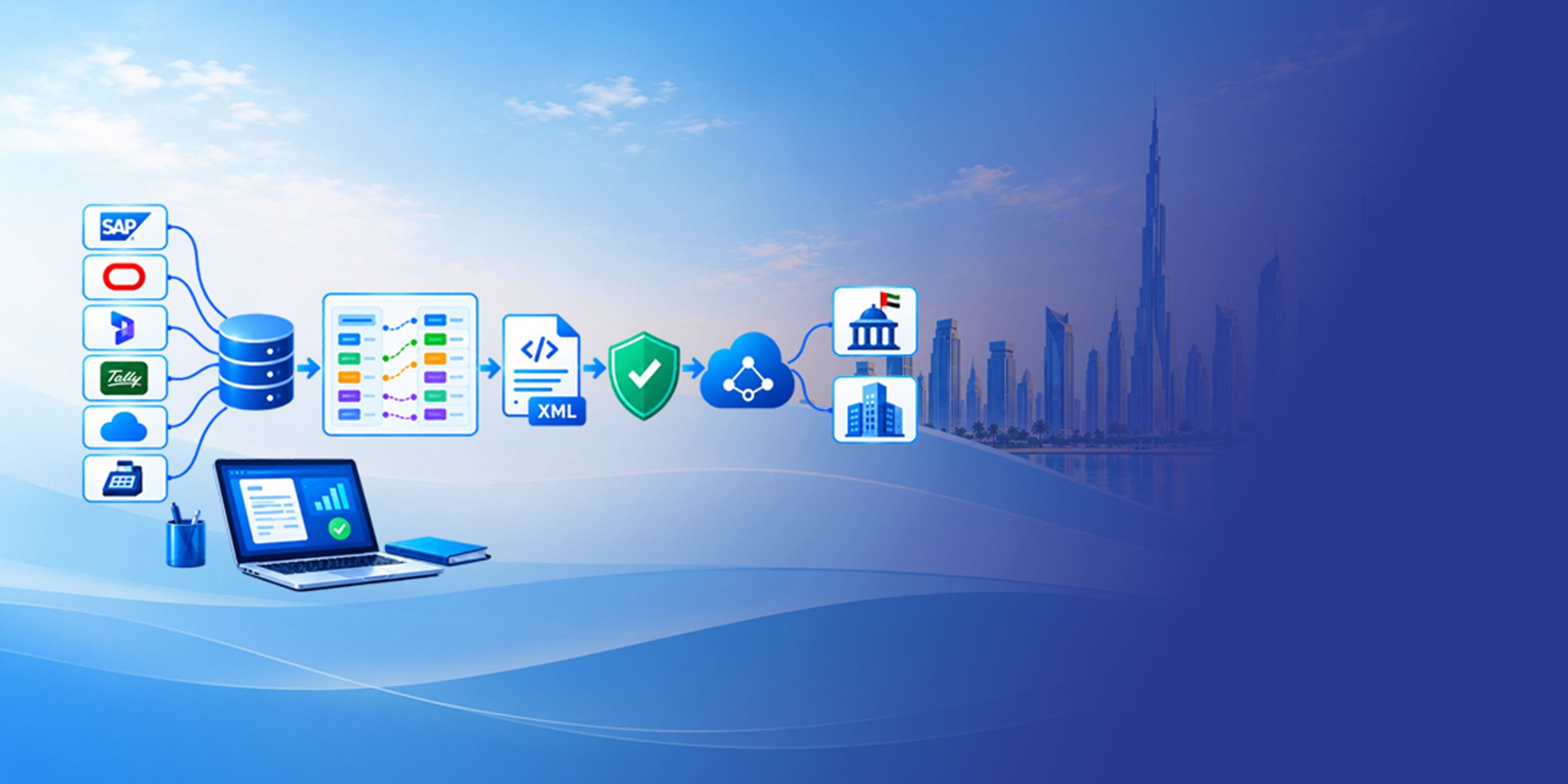
ERP → ASP → Peppol Network → Recipient ASP → Recipient ERP
The ERP generates invoice information, the ASP validates and processes the data according to applicable requirements, and the Peppol-based infrastructure supports standardized transmission.
This relationship is another reason why PINT AE vs Peppol should be understood as “content specification versus exchange framework.”
Why Does This Matter for UAE Businesses?
Understanding PINT AE vs Peppol becomes particularly important when selecting an ASP or preparing ERP systems for UAE e-invoicing.
Businesses should evaluate whether their solution can:
- Generate structured invoices compatible with PINT AE.
- Validate mandatory invoice fields and business rules.
- Integrate with existing ERP and accounting systems.
- Exchange documents through the required network architecture.
- Manage invoice status and acknowledgements.
- Handle rejected or invalid invoices efficiently.
- Maintain appropriate records and audit trails.
Effective uae e-invoicing error handling is also essential because simply transmitting an invoice does not guarantee successful processing.
PINT AE vs Peppol: Which One Does Your Business Need?
The answer is not “PINT AE or Peppol.” Businesses preparing for UAE e-invoicing need to understand how the two work together.
PINT AE defines the UAE invoice requirements, while Peppol provides the broader interoperability framework for electronic document exchange.
For finance and technology teams, PINT AE vs Peppol should therefore be part of the ASP selection, ERP integration, compliance, and implementation discussion.
Ultimately, This is about understanding two different layers of the same digital invoicing ecosystem. Getting both layers right can help organizations build a scalable, interoperable, and compliant UAE e-invoicing process.
As the UAE moves toward mandatory e-invoicing, businesses that understand it early can make better technology decisions and reduce implementation challenges.