ERP E-invoicing Integration UAE : Preparing Businesses for Digital Compliance
As the UAE accelerates its transition toward mandatory electronic invoicing, UAE ERP e-invoicing integration is becoming a central focus for businesses aiming to achieve compliance and operational efficiency. Organizations using ERP platforms such as SAP, Oracle, Microsoft Dynamics, and other systems must evaluate how integration will impact invoice generation, validation, and exchange within their existing processes.
The importance extends beyond regulatory requirements. It enables automation of invoice workflows, improves VAT reporting accuracy, reduces manual intervention, and supports seamless interaction between suppliers, buyers, and Accredited Service Providers (ASPs). As the UAE moves toward a structured invoicing framework, ERP integration will play a critical role in ensuring uninterrupted business operations.
Why it Matters
Modern organizations rely heavily on ERP systems to manage finance, procurement, and tax processes. With the introduction of structured invoicing, ERP integration is expected to become a mandatory operational capability for compliant invoice exchange.
Without proper integration, businesses may face challenges such as manual uploads, inconsistent data mapping, validation errors, and increased compliance risks. In contrast, a well-designed integration enables automated invoice transmission while ensuring alignment with structured data and regulatory requirements.
Key Components of ERP E-invoicing Integration UAE
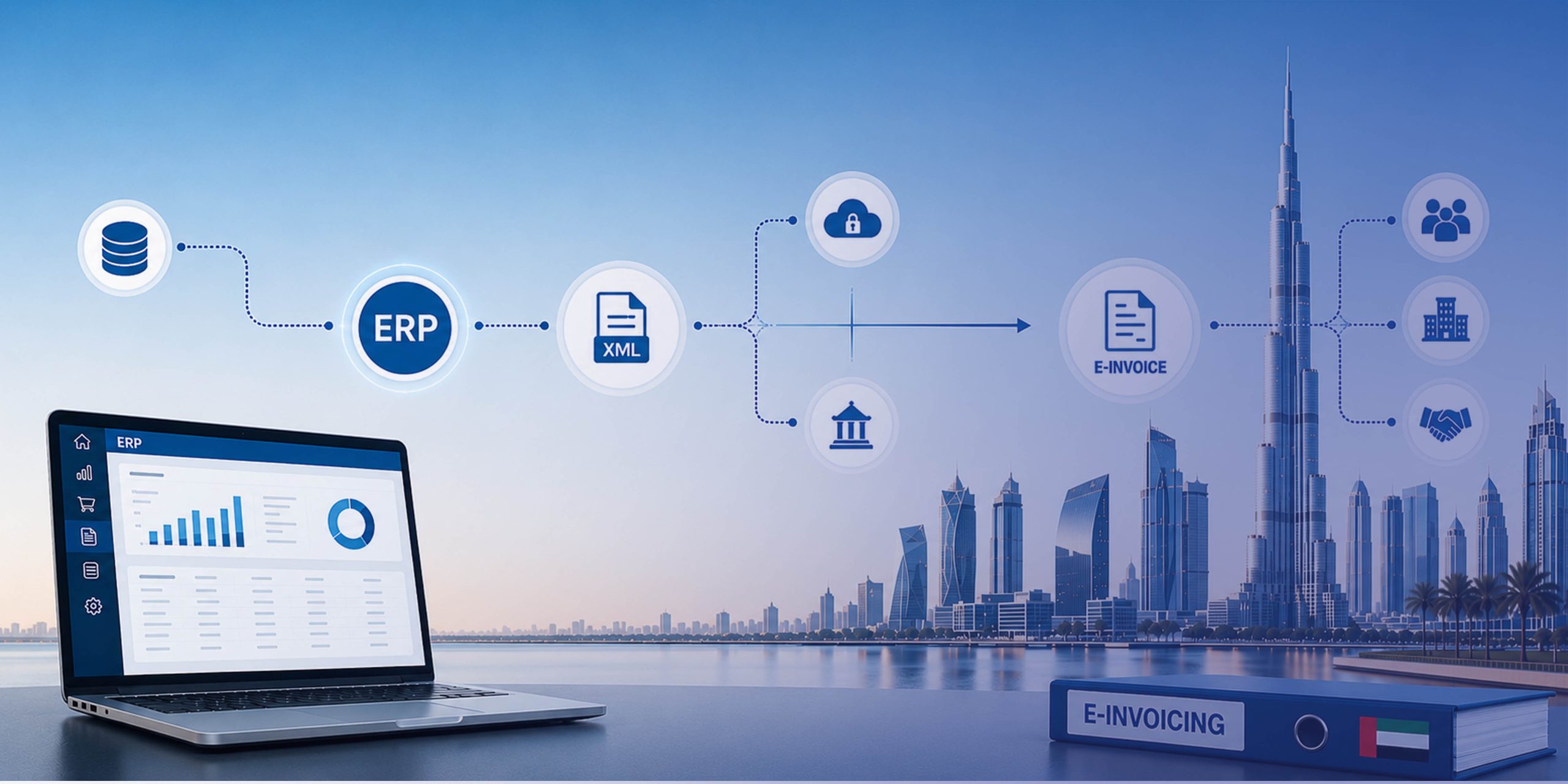
Successful integration requires connecting ERP systems with e-invoicing networks and ASPs within a decentralized exchange model. Key components typically include:
- Structured invoice generation (expected formats such as XML under Peppol-based frameworks)
- API-based connectivity for invoice transmission
- Data mapping aligned with UAE-defined structured standards (expected to follow Peppol PINT principles)
- Invoice validation and error-handling workflows
- Secure transmission, authentication, and data integrity mechanisms
- Automated invoice exchange, tracking, and status updates
Organizations investing early in these components will be better prepared for the UAE’s phased rollout before the announced UAE e-invoicing deadline.
Benefits of ERP E-invoicing Integration UAE
One of the primary advantages are improved operational efficiency. Businesses can automate invoice creation and submission directly from their ERP systems, eliminating manual processing.
In addition, this also enhances compliance by ensuring invoices meet structured data requirements before transmission. This reduces the risk of errors, rejections, and VAT reporting inconsistencies.
Another key benefit is improved visibility and audit readiness. Organizations can maintain centralized records, detailed audit trails, and real-time tracking of invoice status across trading partners.
ERP Systems Supporting UAE e-invoicing
Many organizations are evaluating how their ERP platforms will support UAE e-invoicing integration. Common systems include:
- SAP S/4HANA
- Oracle ERP
- Microsoft Dynamics 365
- NetSuite
- Tally and regional ERP solutions
- Custom-built enterprise platforms
Each system may require a different approach, depending on architecture, data structure, and integration capabilities.
Challenges in ERP E-invoicing Integration UAE
Despite its advantages, UAE ERP e-invoicing integration presents several challenges. Businesses must assess data quality, ensure accurate VAT mapping, and update master data to align with structured invoicing requirements.
Legacy systems may require customization to support, particularly for structured formats and API-based communication. Additionally, organizations may need support from ASPs or implementation partners to achieve full compliance.
Change management is another critical factor. Teams across finance, IT, and compliance must adapt to new workflows.
Importance of Data Mapping
Accurate data mapping is a cornerstone. ERP fields must align with structured invoice requirements to prevent validation failures and rejected invoices.
This includes ensuring correct VAT details, supplier and buyer information, invoice references, and payment data. Strong validation mechanisms help improve data accuracy and ensure smooth invoice exchange.
Preparing for the Future with UAE ERP e-invoicing integration
As the UAE moves toward a decentralized, near real-time reporting model for e-invoicing, UAE ERP e-invoicing integration will become essential for all businesses operating in the region. Early adoption allows organizations to avoid last-minute disruptions and ensures readiness for compliance requirements set by the Federal Tax Authority.
Companies that invest in integration today will benefit from increased automation, stronger compliance controls, and improved financial transparency. In the evolving digital tax landscape, it is not just a technical upgrade—it is a strategic necessity for long-term business success.